COPYRIGHT

All content on this blog is protected by copyright.
Content used elsewhere without attribution constitutes theft of intellectual property and will be prosecuted.
Showing posts with label Crusader Castles. Show all posts

Saturday, May 9, 2026

Defence of the Realm : Static Defence

The great walled cities of the Levant — Antioch, Tripoli, Beirut, Tyre, Acre, Caesarea, Jaffa, Ascalon and Jerusalem itself — were the anchors of the Frankish defence network. Cities that could withstand extended sieges, particularly coastal cities that could be resupplied by sea, were invulnerable to any but the most tenacious opponents. Throughout most of Outremer’s history, the armies opposing the Franks were too transient to sustain lengthy sieges and frequently disintegrated or withdrew at the mere approach of the Frankish field army.


The eminent cities and smaller walled towns in the interior such as Hebron, Bethlehem, Tiberias and Nazareth were supported and reinforced by castles great and small. The most famous castles are the large concentric ones that represented the pinnacle of military architectural development of the period, such as the now-famous Crac de Chevaliers, Montfort (Starkenburg) and Kerak. However, most crusader castles were much simpler and smaller, often little more than a tower or a perimeter wall. Altogether roughly 100 Frankish castles have been identified.

For centuries, it was presumed the Franks mostly adapted existing defensive structures in already-established population centres. Archaeological surveys of the last quarter-century, however, prove that nearly half the castles built in the twelfth century were constructed in rural and remote areas of the country near Oriental Christian monasteries or settlements. There is ‘almost no correlation between the location of the castles and areas of military confrontation’.[i] In short, the purpose of many castles was not so much defence as administration; they were first and foremost symbols of power and presence and only secondarily places of refuge in an emergency.

Because of the speed with which the Frankish army could mobilise, castles of the pre-Saladin era needed to be capable of holding out no more than one week. Only in the later twelfth century did the Franks start constructing the massive castles we associate with the term ‘crusader castles’. In part, this was a response to the threat posed by Saladin and, in part, necessary to compensate for improvements in Saracen siege equipment and tactics. This dictated the construction of thicker and higher walls as well as multiple lines of defence, resulting in concentric castles, such as Crac de Chevaliers. 

Immense fortifications, however, required ample garrisons of trained fighting men. Records tend to mention only the number of knights assigned to a garrison because contemporaries knew that for every knight, there were also sergeants, archers, squires and servants of roughly ten men per knight. Thus, castles garrisoned by, say, forty knights were not defended by forty men but by four hundred men, 10 per cent of which were knights.

Furthermore, these new castles were extremely expensive to build and maintain. Based on thirteenth-century Templar records for the reconstruction of the castle at Safed, castle construction cost approximately one million Saracen bezants; in modern terms, roughly one billion pounds. The modern equivalent of the annual maintenance costs comes to roughly forty million pounds. In the twilight of the crusader states, it was as much the inability to finance such expenses as the decline in manpower reserves that doomed the Frankish kingdom. Furthermore, the great concentric castles of the thirteenth century may have had the negative side effect of encouraging more passive tactics, even though offensive operations had served the kingdom so well in the past.


[i] Ronnie Ellenblum, Crusader Castles and Modern Histories (Cambridge: Cambridge University Press, 2007), 172.


The bulk of this entry is an excerpt from Dr. Schrader's comprehensive study of the crusader states.

Dr. Helena P. Schrader is also the author of six books set in the Holy Land in the Era of the Crusades.


           Buy Now!                                                  Buy Now!                                                    Buy Now!
 

          Buy Now!                                               Buy Now!                                                      Buy Now!


Monday, May 24, 2021

The Castle of the Queen - Kantara Castle

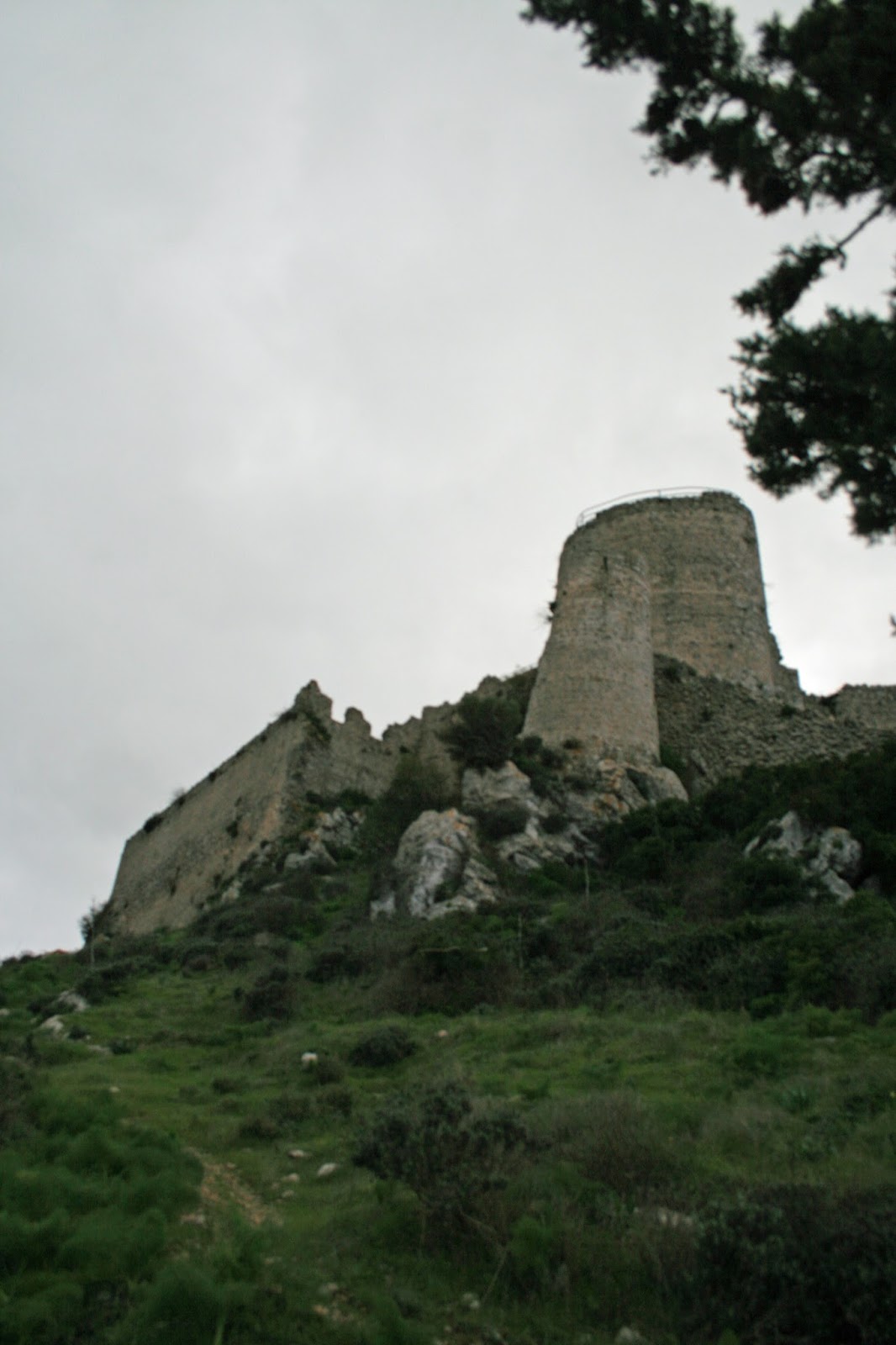
 Kantara, like St. Hilarion, is located on Cyprus. Its foundations stretch back before the crusader period, but it played an important role in crusader times. It is also shrouded in mystery and legends in addition to being located in a spectacular landscape.


 The view up to the castle.

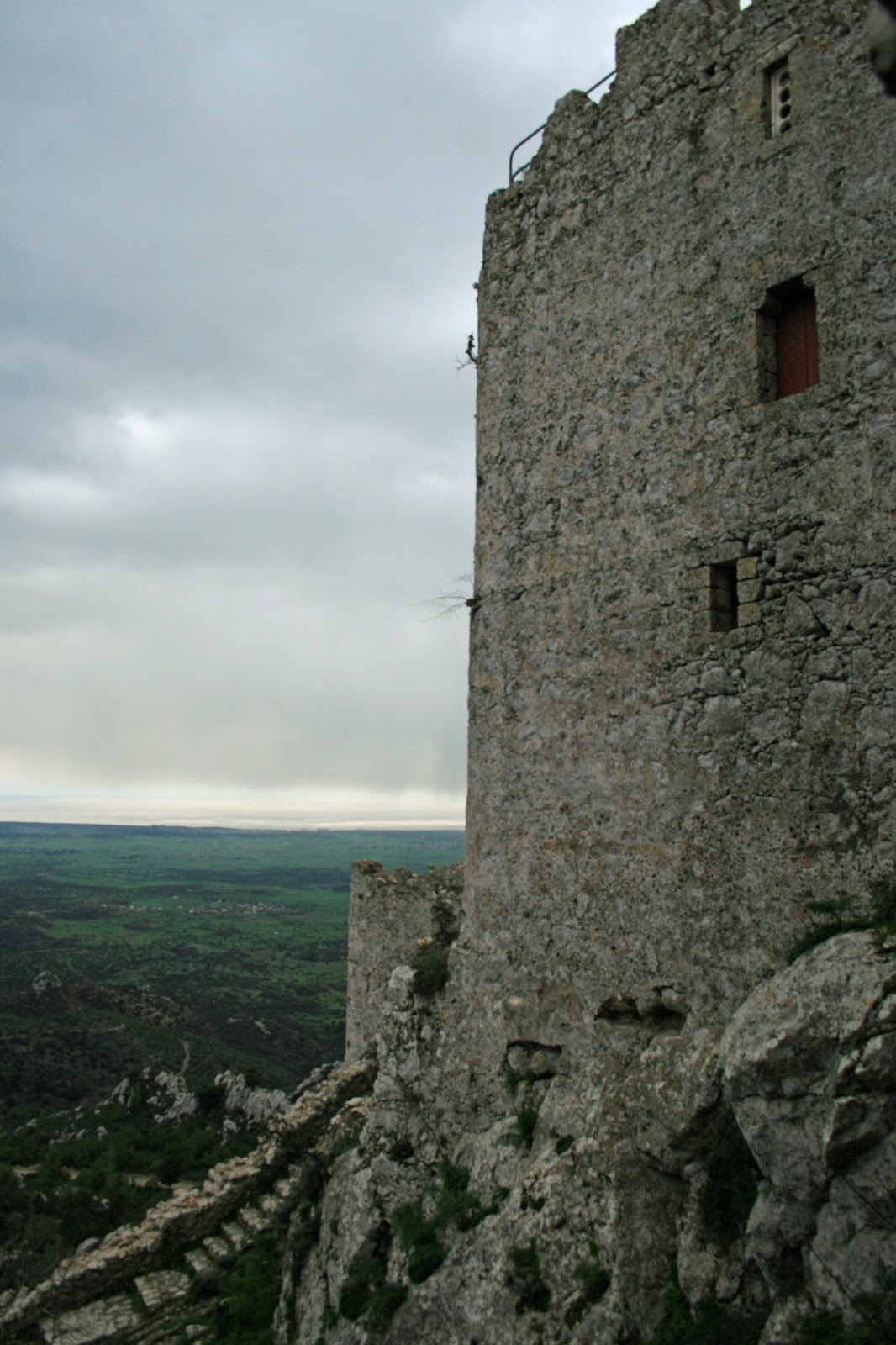
Kantara is located on the tip of a long, narrow ridge as the Kyrenia mountain range comes to an abrupt end overlooking the plain of Karpas. It sits 630 meters (2,067 feet) above the Mediterranean.


 And the View Down to the Sea

Although the fundamental structure was constructed under the Byzantine Emperor Alexius I Comnenus  after the Greek Empire re-established firm control over the island of Cyprus, the name is thought to derive from Arab the words "kandara" (high building) or "kandak" (castle).  This suggests there may have been an earlier structure, an outpost or watch tower, that occupied this strategic location before the Comnenus Emperor constructed a full-fledged castle. 

During Richard the Lionheart's invasion of Cyprus in 1191, Kantara served as a temporary refuge for the Greek tyrant Isaac Comnenus, and not even the great Lionheart made any attempt to take it.  Then again, he didn't need too. He captured the seaside fortress of Kyrenia instead and with it Isaac's beloved daughter. The tyrant submitted without any further resistance after his daughter's capture.

 
During the bitter wars between Emperor Friedrich II and the barons, on the other hand, the castle of Kantara was subjected to a long and brutal siege.   Defended by men loyal to the German emperor, the barons of Cyprus besieged the castle. Their forces were commanded by Anseau de Brie.  Brie built a trebuchet that, according to the contemporary chronicler and witness Philip de Novare (a fighting man in the service of the Ibelins), "battered down nearly all the walls."  While this was doubtless an exaggeration, Novare also reports that the bedrock on and into which the castle was built defied destruction.  Multiple attempts to assault the castle were successfully repulsed.


The castle only surrendered after ten months of siege due primarily to dwindling supplies and the demoralization of the garrison after the death of their commander, Gauvain de Cheneche. The latter was one of the five baillies appointed by Frederick II. (See: The Emperor's Men)

During the Genoese occupation of Cyprus in late 15th century, the castle was held for the crown and was twice attacked by Genoese forces. It resisted both assaults successfully, and became the base for counter-attacks, preventing Genoese control of the Karpas peninsula.


After the collapse of Lusignan rule on Cyprus and the establishment of Venetian control in the 16th Century, the castle was abandoned and began to decay.


Left behind were the impressive structures that gradually became ruins and the legends. The locals started to call it "the castle of a hundred chambers" -- although according to legend the 101st chamber contained a treasure that no one had ever found. Or, alternatively, the 101st chamber was enchanted and if one fell asleep in it, one woke up years later in a lovely garden. Another local name for the castle was "the house/residence of the queen" -- although no specific queen appears to be associated with the castle historically. 

The 19th century traveler D. Hogarth combines these themes suggesting: "...the traveler might imagine it the stronghold of a Sleeping Beauty, untouched by change or time for a thousand years."

Kantara certainly captured my imagination and my heart. It is the setting of many episodes of the (unpublished) "Lion of Karpas" and has a modest role in "The Last Crusader Kingdom" and is an important venue of key events in "Rebels against Tyranny."


 Buy Now!                                             Buy Now!

Friday, April 5, 2019

The Caslte of the Queen -- Kantara Castle

The third castle in my series on crusader castles is, like St. Hilarion, located on Cyprus. Its foundations stretch back before the crusader period, but it played an important role in crusader times. It is also shrouded in mystery and legends in addition to being located in a spectacular landscape.


 The view up to the castle.

Kantara is located on the tip of a long, narrow ridge as the Kyrenia mountain range comes to an abrupt end overlooking the plain of Karpas. It sits 630 meters (2,067 feet) above the Mediterranean.


 And the View Down to the Sea

Although the fundamental structure was constructed under the Byzantine Emperor Alexius I Comnenus  after the Greek Empire re-established firm control over the island of Cyprus, the name is thought to derive from Arab the words "kandara" (high building) or "kandak" (castle).  This suggests there may have been an earlier structure, an outpost or watch tower, that occupied this strategic location before the Comnenus Emperor constructed a full-fledged castle. 

During Richard the Lionheart's invasion of Cyprus in 1191, Kantara served as a temporary refuge for the Greek tyrant Isaac Comnenus, and not even the great Lionheart made any attempt to take it.  Then again, he didn't need too. He captured the seaside fortress of Kyrenia instead and with it Isaac's beloved daughter. The tyrant submitted without any further resistance after his daughter's capture.

 
During the bitter wars between Emperor Friedrich II and the barons, on the other hand, the castle of Kantara was subjected to a long and brutal siege.   Defended by men loyal to the German emperor, the barons of Cyprus besieged the castle. Their forces were commanded by Anseau de Brie.  Brie built a trebuchet that, according to the contemporary chronicler and witness Philip de Novare (a fighting man in the service of the Ibelins), "battered down nearly all the walls."  While this was doubtless an exaggeration, Novare also reports that the bedrock on and into which the castle was built defied destruction.  Multiple attempts to assault the castle were successfully repulsed.


The castle only surrendered after ten months of siege due primarily to dwindling supplies and the demoralization of the garrison after the death of their commander, Gauvain de Cheneche. The latter was one of the five baillies appointed by Frederick II. (See: The Emperor's Men)

During the Genoese occupation of Cyprus in late 15th century, the castle was held for the crown and was twice attacked by Genoese forces. It resisted both assaults successfully, and became the base for counter-attacks, preventing Genoese control of the Karpas peninsula.


After the collapse of Lusignan rule on Cyprus and the establishment of Venetian control in the 16th Century, the castle was abandoned and began to decay.


Left behind were the impressive structures that gradually became ruins and the legends. The locals started to call it "the castle of a hundred chambers" -- although according to legend the 101st chamber contained a treasure that no one had ever found. Or, alternatively, the 101st chamber was enchanted and if one fell asleep in it, one woke up years later in a lovely garden. Another local name for the castle was "the house/residence of the queen" -- although no specific queen appears to be associated with the castle historically. 

The 19th century traveler D. Hogarth combines these themes suggesting: "...the traveler might imagine it the stronghold of a Sleeping Beauty, untouched by change or time for a thousand years."
Kantara certainly captured my imagination and my heart. It is the setting of many episodes of the (unpublished) "Lion of Karpas" and has a modest role in "The Last Crusader Kingdom" and "Rebels against Tyranny."


 Buy Now!                                             Buy Now!
 
Dr. Helena P. Schrader holds a PhD in History.
 She is the Chief Editor of the Real Crusades History Blog.
She is an award-winning novelist and author of numerous books both fiction and non-fiction. Her three-part biography of Balian d'Ibelin won a total of 14 literary accolades. Her most recent release is a novel about the founding of the crusader Kingdom of Cyprus. You can find out more at: http://crusaderkingdoms.com

Thursday, March 7, 2019

St. Hilarion - The Stronghold of the Lusignans

In writing about Medieval Cyprus it is impossible to overlook the most powerful and dramatic of all the medieval fortresses: St. Hilarion. It is the setting of several key historical episodes that inherently fall within the framework of my novels -- and I couldn't resist using it for fictional episodes as well. Below is a brief history.


The castle stands 700 meters (2275 feet) above sea level on the narrow ridge of the Kyrenia range just slightly southwest of the port of Kyrenia.  It was built by the Byzantine governor of the island after the Comnenus emperors re-established full control over Cyprus in the late 10th. Constructed between 1102 and 1110, it was called Didymos by the Byzantines for the twin mountain peaks between which the upper castle sits.  The crusaders, however, preferred to call it the castle of "Dieu d'Amour" (the God of Love) and the locals continued to refer to it as St. Hilarion because the saint of that name had built a monastery, been buried and venerated here long before the castle was built. 

  Remnants of the Castle Church

The castle boasts three lines of defense and was never taken by assault. It was, however, frequently besieged. 

 View from the upper to the lower ward.

In July/August 1228, after Emperor Friedrich II accused John d'Ibelin of malfeasance and attempted to seize his fief without trial, Ibelin secured control of St. Hilarion, had it well provisioned and moved his supporters' dependents there in preparation for a confrontation.  Ibelin was persuaded to turn the castle over to the King of Cyprus in exchange for the release of his two hostage sons -- or vice versa, depending on how one interprets the negotiations.


When Friedrich II left the Holy Land for the West, he turned St. Hilarion over to his appointed baillies with orders for them to prevent the Ibelins from setting foot on the island. Within two months, however, the Ibelins had pulled together a sufficient army to challenge this (illegal) order head on. They landed on the south coast and routed the imperial forces at the Battle of Nicosia on July 14, 1229.  The surviving leaders of the imperial supporters fled to the three mountain castles, Kantara, Buffavento and St. Hilarion. A siege began almost at once that lasted nearly a year. Shortly after Easter in 1230, the Imperial forces surrendered to the Ibelins.


Just two years later, in May 1232, fortunes were reversed. The Imperial forces were on the offensive. With the Lord of Beirut, all his sons and the bulk of his knights struggling to relieve a besieged Beirut, the Imperial forces seized control of Cyprus.  The supporters of the Ibelins were forced to seek refuge in St. Hilarion and Buffavento, where they were soon subjected to a siege. Six weeks later, after defeating the Imperial forces at the Battle of Argidi on June 15, 1232, the Ibelins were able to lift the siege of St. Hilarion and rescue their women and children. 


A long period of peace followed this episode, and St. Hilarion was strengthened and embellished by the Lusignan kings to turn it into an idyllic summer residence high above the heat of the coast. In 1348, King Hugh IV retreated to the castle to escape not an enemy but the plague. During the later Genoese invasion, St. Hilarion was an important royal base of operations, the key to disrupting Genoese internal lines of communication.


After that, like Kantara, it lost relevance and fell into disrepair and finally ruin from the 16th century onwards.

St. Hilarion is the setting of important historical events described in "Rebels against Tyranny."

Buy Now!


Dr. Helena P. Schrader holds a PhD in History.

She is the Chief Editor of the Real Crusades History Blog.

She is an award-winning novelist and author of numerous books both fiction and non-fiction. Her three-part biography of Balian d'Ibelin won a total of 14 literary accolades. Her most recent release is a novel about the founding of the crusader Kingdom of Cyprus. You can find out more at: http://crusaderkingdoms.com


Thursday, February 7, 2019

Kerak - The Castle of the Robber Baron of Oultrejourdain


The Castle of Kerak has become inextricably associated with the infamous Reynald de Châtillion, the Lord of Oultrejourdain in the late 12th century. Indeed, the Arabs referred to Châtillion as “al-Karak”— of Kerak. The castle, however, is greater than its most famous lord, serving both the Ayyubids and the Mamlukes as a center of power as well. Today it is a still impressive reminder of Crusader military architecture.


The construction of Kerak (also Karak, Kerak in Moab and Karak al-Shawbak) began in 1142 in the reign of King Fulk and Queen Melusinde. The construction was undertaken by Payen (also Pagen) the Butler, Lord of Montreal and Oultrejourdain.  

It was constructed on Roman foundations, but its design was mostly dictated by geography.  It was built on the very tip of a promontory or spur formed by two steep gorges. To the east, south and west, the land dropped almost vertically to the valley floor some 3,000 feet below. To the north, as the spur of the ridge widens slightly, is the town of Kerak.  In medieval times the castle was separated from the town by a deep fosse that cut across the entire width of the spur and could only be crossed by a draw bridge.

Because of the sheer sides of the cliffs to the east, south and west, siege engines could only be brought to bear from the north after capturing the town. To capture the castle it was also necessary to fill in the deep fosse separating it from the town. The castle itself had two walls facing the vulnerable north, the first flanked by two towers and the second reinforced by five towers. Vaulted chambers on two levels backed up against the inside of the inner wall and could also be used as fighting galleries. Altogether the castle’s situation and design caused a number of Arab commentators from the 12th to 14th centuries to conclude it impregnable.

However, the castle was also designed to withstand long sieges. It had a massive cistern, ample cellars for storing food, and accommodation for a substantial garrison. It was divided into two long wards that ran north south, the western of which was narrow and appears to have been used for stables and the like, while the upper/eastern ward contains the chapel and the better accommodations.


Kerak is located beyond the Dead Sea in what is now Jordan. It lay along the lines of trade and communication between Egypt and Syria, or (in Crusader times) the Sultanates of Cairo and Damascus. It also lay along the main pilgrimage route from Turkey and Syria to Mecca. Yet the town, high above the desert, had been a Byzantine bishop’s seat and remained predominantly Christian throughout the period of Arab occupation from the mid-7th century to the establishment of the crusader kingdom of Jerusalem.

In 1176, Reynald de Châtillion married the widowed Stephanie de Milly, the heiress to Kerak. He used the castle as his base to pursue a aggressive policy against Salah ad-Din. Although frequently portrayed as a “renegade” interested only in his own profit, a number of serious crusades historians have pointed out that, far from being senseless, his attacks served strategic goals. (For details see: http://www.crusaderkingdoms.com/reynald-de-chatillon.html)  It was precisely because Châtillion’s raids humiliated and threatened Salah ad-Din’s lines of communication to his power-base in Egypt that the Sultan came to see Châtillion as a personal enemy.

Hollywood's Reynald from "The Kingdom of Heaven"

Salah ad-Din moved against Châtillion in 1183, laying siege to Kerak in November. By chance the siege commenced during the celebration of the marriage of Châtillion’s stepson, Humphrey de Toron IV, to Princess Isabella of Jerusalem. Among the guests visiting the castle for the nuptials were Isabella’s mother, the dowager queen of Jerusalem, Maria Comnena, and the queen mother, Agnes de Courtney.

The relief of the castle was delayed by the unanimous refusal of the assembled barons of Jerusalem to fight under the leadership of the king’s brother-in-law, Guy de Lusignan. Guy had been named regent of the kingdom earlier in the year because the king was suffering from leprosy that was becoming increasingly debilitating. Only after King Baldwin IV agreed to resume the rule of his kingdom and lead the feudal army himself did the feudal army come to the relief of Kerak.  Despite being delayed by roughly a month, the appearance of the force was enough to induce Salah ad-Din to lift his siege.


The sultan returned the following year, 1184, prepared to fill in the fosse and take the castle by storm.  Yet again, the arrival of the Frankish army forced him to lift the siege.  For a second time he withdrew his forces without a fight.

After the Christian defeat at Hattin, Salah ad-Din executed Reynald de Châtillion immediately and -- according to some accounts -- personally. This act made Kerak  the property of Châtillion’s step-son Humphrey de Toron IV.  Toron had been captured at Hattin and was Salah ad-Din’s prisoner. The Sultan attempted to exploit this fact to negotiate the surrender of Kerak in exchange for the release of Toron. The garrison refused, so Salah ad-Din dispatched his brother al-Adil to reduce Kerak. After roughly one year, in November 1188, the garrison surrendered. Most sources agree they were not out of food much less water.  Rather, the hopelessness of their situation, since there was no longer a feudal army capable of coming to their relief, or possibly disease is believed to have led to the surrender. 

 
Salah ad-Din granted the castle to his brother al-Adil, who made it one of his power-bases and treasuries. He re-fortified parts of it and built or embellished the accommodations turning them into a (rough) palace in 1192. Thereafter, it served as the administrative center for what is now essentially Jordan under the Ayyubids. 

With the fall of the Ayyubids, Kerak passed into the control of the Mamlukes, who also used it as a power base, deepening the fosse and improving the fortifications and accommodations. Finally the Ottomans used the castle as an administrative center for the region, but it’s relevance in defense had long since been lost. Today it is a tourist attraction, open to the public, and can be visited.

Kerak is featured in the first two volumes of my Jerusalem Trilogy, particularly in award-winning Defender of Jerusalem, which describes Salah ad-Din's siege of 1183 in detail.


                                                           Buy Now!


Dr. Helena P. Schrader holds a PhD in History.
She is the Chief Editor of the Real Crusades History Blog.
She is an award-winning novelist and author of numerous books both fiction and non-fiction. Her three-part biography of Balian d'Ibelin won a total of 14 literary accolades. Her most recent release is a novel about the founding of the crusader Kingdom of Cyprus. You can find out more at: http://crusaderkingdoms.com