COPYRIGHT

All content on this blog is protected by copyright.
Content used elsewhere without attribution constitutes theft of intellectual property and will be prosecuted.
Showing posts with label Crusader Kingdoms. Show all posts

Wednesday, May 16, 2018

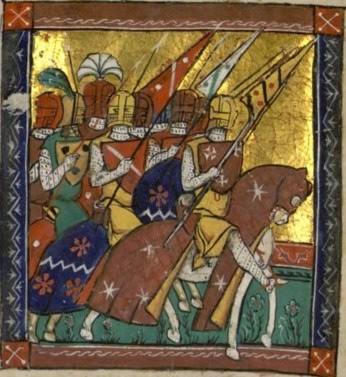
The Knights and Nobles of Outremer

Whereas most kingdoms in Western Europe emerged organically from the remnants of the Roman empire, the crusader states were abrupt, artificial creations -- and so were their feudal elites. Today I discuss the background and -- until recently misunderstood - characteristics of the knights and nobles in these states.


The leaders of the First Crusade naturally brought their notions of society and government with them.  Although, they made a virtue out of necessity and co-opted institutions and traditions with Arab, Turkish and even Greek roots. (See: Administrative Backbone.) They nevertheless succeeded at imposing a feudal over-structure onto their newly acquired territories.  John de La Monte in his classic study, Feudal Monarchy in Jerusalem 1100-1291, writes:

… in the feudal system of Jerusalem we find an almost ideal system of feudalism….The colonist carried with him from his native land his native ideal of the state and put it into effect as far as he was able in the land of his adoption.

Yet there was a problem: feudalism depends on nobility and a knightly class --  both of which were lacking in the newly conquered territories. To be sure, the leaders of the First Crusade had been French noblemen, and a handful of these leaders remained behind, forming the very summit of the feudal pyramid as kings, counts and princes. But feudalism, in contrast to the absolutism of the renaissance, depended on a much broader base; it depended on a class of barons (tenants-in-chief), and lesser vassals (the tenants of the barons) and “simple” knights as well. 

In Western Europe, barons and knights held land, and drew from the land the income to support their military apparatus. For a knight that had to be enough income to support himself, his squire, four horses and armor and weapons for all. For a baron, it might be enough land to support scores of knights. But in the early years of the crusader kingdoms, there was no land to share out and Joshua Prawer points out:  “...the mass of milites [knights] was no more than a salaried army, composed of knights receiving salaries or assigned fixed revenues.” (p. 129)

In the decades that followed, however, the crusader states expanded from the cities to take control of a broad band of territory along the Eastern Mediterranean occupying roughly what is now Lebanon, Israel and the western half of Jordan. The Kingdom of Jerusalem at its greatest extent touched the tip of the Red Sea at Eilat in the south and reached to Antioch in modern Turkey in the North, as well as stretching across the Jordan River to the East. With this expansion came the establishment of lordships, roughly two-dozen in all. 


So lordships had been created, but who were the lords ― the Prince of Galilee, the Count of Jaffa and Ascalon, the Lords of Beirut, Hebron, Sidon, Oultrejourdain, Ibelin, Ramla, Arsur, Nablus, Caesarea, Haifa, Sabaste, Bethsan, Toron and more?

One thing is clear: they were not counts and lords from Western Europe. They were men who had made their fortune in the Holy Land. The chronicler Fulcher of Chartres, who summarized the opportunities in the Holy Land ― and the social mobility we seldom associate with the Middle Ages. In A History of the Expedition to Jerusalem 1095-1127, written in the early 12th century, he claims: 

“The Italian and the Frenchman of yesterday have been transplanted… Every day relatives and friends…come to join us. They do not hesitate to leave everything they have behind them. Indeed…he who was poor attains riches here. He who had no more than a few pennies finds himself in possession of a fortune.”

Attempts to trace the origins of even some of the most prominent noble families, such as the Ibelins, are rarely fruitful. In charters and deeds, donors, recipients and witnesses are often listed by first names and descriptors (such as “the old”) only. If they are referred to by first name and a place, it is as common for this to be the place of current residence rather than the place of origin. To make things even more difficult, many place names are very vague indeed ― such as “l’Aleman” to mean simply “the German.” 

This is partly due to the period, family names were only just emerging and coming into use in the 12th century. But the situation was compounded in the Holy Land by the fact that so many of the early settlers came from non-noble background and were at best knights. Yet when these men won the favor of the king they were named to important offices (e.g. like constable and marshal) ― or given fiefs. Men of sufficient worth, gained important and wealthy fiefs, which they held directly from the crown. They were now barons.


Barons, however, were only the second strata in feudal society. They derived their power from the ability to field large numbers of fighting men, both knights and sergeants and/or Turcopoles. The larger the barony, the more knights fees it supported, i.e. the larger number of knights it could support. Knights were essential to the defense of the crusader states because they formed the core or elite military force of the kingdom’s army.


For much of the last century, the image of the knights of Outremer was shaped by Joshua Prawer, who argued:

As a rule, the Frankish landowner did not retain demesne lands of any importance, and his income came almost wholly from the tenurae held from him by his peasants. There was, then, little interest in the direct management of rural estates and no incentive to live in a manor house in the village or in the fief. (p. 130)

From this premise, Prawer evolves the theory that the knights of Outremer were urban rather than rural ― and hardly distinguishable from the Frankish bourgeoisie. He also claims that they often intermarried with the Italian and even native merchant-class, and were highly dependent on royal or baronial patronage.  He concludes that in the “second” Kingdom of Jerusalem (after the loss of the interior of the Kingdom to Saladin in 1187-1188), “simple knights, already very much dependent on their lords in the twelfth century, [were] little more than salaried knights, not to say simple mercenaries.” (p. 140) 

More recent research, notably that of Ronnie Ellenblum, has since proved that Prawer's assumptions were utterly incorrect. Archaeological evidence turned up by surveys conducted by the Hebrew University of Jerusalem have proven beyond a shadow of a doubt that the Franks had extensive rural settlements, constructed manor houses, villages, mills, irrigation systems and roads -- and that these rural holdings "owed" knights to the feudal lord. In short, this was a feudal society based on rural land-holdings just as in Western Europe. 

And where did these knights come from? We don't know very much beyond the fact that the names associated with the rural holdings reflect immigration from Western Europe especially France and Italy. Likewise, charters indicate that families that in one generation were designated as "sergeants" often produce knights in the next generation. Intriguingly, we also know of isolated instances of native Christians rising to the knightly class through service to the Frankish elite. In short, upward mobility was very much possible in the crusade states.  Last but not least, it was also a common practice to give land to younger brothers, for them to hold from their elder brother, thus providing "cadet lines" of the leading barons with landed property that kept them rooted in society and financially secure, rather than creating a class of "landless younger sons."

Admittedly, not all knights in the crusader states had rural estates. Some did have "money fiefs" based on urban incomes, but to suggest that the majority of knights in the crusader states were "urban knights" is wrong. A thirteen century catalog of feudal service by lordship -- including money fiefs -- lists  only 131 of 677 ― less than 20% ― urban knights.  The rest came from the barons with extensive land holdings. 


Even the loss of the interior of the Kingdom of Jerusalem did not, as Prawer and others argued, lead to the urbanization of the entire knightly class. This is because almost immediately after the loss of the interior came the acquisition of the even larger and richer Kingdom of Cyprus.  We know that nearly all the barons of Jerusalem also held fiefs in Cyprus. They did so because Guy and Aimery de Lusignan, who were both kings of both Cyprus and Jerusalem, rewarded their supporters with fiefs on Cyprus.  George Hill in his A History of Cyprus Volume 2: The Frankish Period 1192-1432, for example, stresses that the Lusignans “let it be known in Palestine, in Syria and in Armenia that he would grant fiefs and lands to all those who were willing to come and settle the island.” (p. 39).

This is certainly an exaggeration, given the fact that Cyprus was hardly an “empty” island in need of settlement. Peter Edbury, the leading historian of medieval Cyprus today, estimates the population was around 100,000.  Nevertheless, it is still indicative of the opportunities available on Cyprus for men of Frankish origin.  It is also undoubtedly true that some of those who went to Cyprus had lost everything to Saladin and only held land on Cyprus. Nevertheless, we know of many noble families, starting with the Ibelins, MontbĂ©liards, and the Princes of Antioch and Tiberias held fiefs in both kingdoms.

The exact location and extent of these holdings, however, is nearly impossible to quantify, however, because the Syrian barons continued to use their Syrian titles. They did so even if the lands from which they derived their titles had been lost irretrievably (e.g. Ibelin and Tiberias), as well as when the territory from which the title derived remained in Frankish hands but had been supplemented by new fiefs on Cyprus such as Caesarea, Beirut and Jaffa.

Especially in cases where lords held a city on the mainland and a rural fief on Cyprus, the rural estates would have been farmed out to vassals so ensure the good governance and economic productivity of the land, while freeing the baron to remain in his principle residence at Beirut, Caesarea, Arsuf etc. This explains how the Syrian lords could still field substantial armies to fight in the Holy Land, despite having very limited land in Syria itself. It was underlined by the fact that the Lord of Beirut could move troops from Cyprus to relieve the Imperial siege of Beirut and take troops back again to expel Imperial troops from Cyprus.


In short, the crusader states did have a higher percentage of “money fiefs” and urban knights than was common in Western Europe in the 12th and 13th century. However, such knights made up only roughly one fifth of the feudal host in the “first” kingdom, and possibly ― but not necessarily ― a larger percentage in the “second” kingdom, without ever representing the majority.

Because of a continuous flow of pilgrims from the West, including a significant number that settled and intermarried with the existing Frankish elites, the knights and nobles of Outremer remained in close contact with the traditions, fashions, thinking, and attitudes of the West. Despite the obscurity of their origins, they shared the same fundamental Weltanschauung or world-view as their contemporaries in France, Flanders and England.  Feudalism, Christianity and Chivalry shaped and guided the lives of nobles and knights in the Holy Land no less than in the West.

Discover the knights and nobles of the crusader kingdoms in Dr. Schrader's award-winning novels set in the Kingdoms of Jerusalem and Cyprus.


       Buy now!                                       Buy now!                                         Buy now!


Dr. Helena P. Schrader holds a PhD in History.
She is the Chief Editor of the Real Crusades History Blog.
She is an award-winning novelist and author of numerous books both fiction and non-fiction. Her three-part biography of Balian d'Ibelin won a total of 14 literary accolades. Her most recent release is a novel about the founding of the crusader Kingdom of Cyprus. You can find out more at: http://crusaderkingdoms.com

Sources:

Hill, George. A History of Cyprus Volume 2: The Frankish Period 1192-1432. Cambridge University Press, 1948.

Jotischky, Andrew. Crusading and the Crusader States. Pearson Longman, 2004.)

La Monte, John. Feudal Monarchy in the Latin Kingdom of Jerusalem 1100 to 1291. Medieval Academy of America, 1932.

Prawer, Joshua. “Social Classes in the Latin Kingdom: the Franks,” Zacour, Norman P. and Harry W. Hazard. A History of the Crusades Volume Five: The Impact of the Crusades on the Near East. University of Wisconsin Press, 1985

Friday, November 10, 2017

Crusader Art

The scarcity of artwork dating from the crusader period found in the Holy Land today does not reflect — as some commentators suggest — a lack of artistic accomplishment or interest in the arts on the part of the elites in the crusader kingdoms. Rather is it the result of the the ravages of war and time, combined with systematic destruction and theft of crusader art by the Muslim conquerors of the Christian kingdoms. Today I provide a very quick overview of some of the artistic achievements of the crusader era.

A medieval window seat with delicate tracery; crusader castle of St. Hilarion on Cyprus

We know from the written record and from the few fragments of art that survive that the Kings of Jerusalem and other Christian rulers invested huge sums in the construction/re-construction and decoration of churches first and foremost. We also know the luxury in which the elites in the crusader states lived attracted censure as well as awe from Western pilgrims, suggesting that secular buildings were likewise beautifully decorated.

The crusader cloisers at the Church of the Nativity in Bethlehem
The best surviving evidence of crusader art is in the architecture and above all sculpture from the Church of the Holy Sepulcher and the Church of the Annunciation at Nazareth.  Fragments of crusader sculpture have also been found at Sebaste, Montfort and St. Mary Major in Jerusalem. However, except where Christian motifs or location make the dating of sculpture unassailable, many works of crusader sculpture is hard to identify because it was incorporated into buildings that were subsequently modified and overlaid with work of later centuries. The covered markets of Jerusalem are largely crusader in origin, but have been used continuously and added to and modified by successive generations. 


One of Jerusalem's covered markets; some of which date back to the reign of Queen Melisende
From the few pieces of art that have been identified unequivocally as crusader sculpture, a clear mix of Byzantine and Romanesque influences has been identified, suggesting either Byzantine artists working for Latin patrons, or Frankish craftsmen under Byzantine masters or combinations of the above.


The Church of Nativity in Bethlehem houses magnificent mosaics from the crusader period. Very extensive wall mosaics depict the life of Christ, the Ecumenical Councils and the ancestors of Christ. These mosaics are carried out in the Byzantine style and were probably executed by Byzantine artists, but they were commissioned by the Kings of Jerusalem, probably Baldwin III or Amalric I, who were both married to Byzantine princesses and maintained close ties to the Byzantine Empire. The choice of Greek artists may also have been guided by the fact that the Church of the Nativity was one of the best preserved churches in the Holy Land, having survived destruction at the hands of the Persians and Muslims. The floor tiles date from the reign of Constantine and were allegedly commissioned by St. Helena. They are still in place today.

Mosaics in the Church of the Nativity, Bethlehem, dating to the reign of Baldwin III
 (apologies for the poor quality of the picture, I took it myself in March 2014)
Wall painting was almost certainly popular in the crusader states as it was in the South of France, whence so many of the early crusaders came, but it is particularly vulnerable to obliteration as it is easily painted over — a method of eliminating unwanted decoration that also inadvertently preserves it for the archaeologist. At least four important frescos from the crusader period have been found in the last half century, including at Crac de Chevaliers.  The style of most wall-painting from the crusader period found to date suggests that Byzantine artists, or craftsmen trained in the Byzantine school, were used for such painting, although the choice of subject was dictated by Western traditions.

Two examples of Byzantine Art; St. George was a particularly popular subject in the Crusader Kingdoms
In contrast, manuscript illustration appears to have been dominated by Western craftsmen. We know from written sources that a Scriptorium was established by the canons of the Church of the Holy Sepulcher. This workshop is said to have produced a large number of works of very high quality, very little of which has survived. One exception is a psalter made for Queen Melisende of Jerusalem. 


The ivory cover of Queen Melisende's Psalter

A Medieval Manuscript Illustration Depicting the First Crusade
After the fall of Jerusalem, there appears to have been an attempt to re-establish a Scriptorium in the Holy Land, this time in Accre, but the quality of the work is notably inferior to that from the Holy Sepulcher. Furthermore, whereas the illustrations of the Melisdende psalter and other works from the 12th century demonstrate strong Byzantine influence, the works from the Acre scriptorium are French and Italian in style.

The fragments of crusader art that survive are pitiably little, a mere whisper of what must have been a rich and distinct artistic heritage formed by the cross-fertilization of various cultures and artistic traditions at the ancient cross-roads of civilization on the eastern edge of the Mediterranean.

Dr. Helena P. Schrader holds a PhD in History.
She is the Chief Editor of the Real Crusades History Blog.
She is an award-winning novelist and author of numerous books both fiction and non-fiction. Her three-part biography of Balian d'Ibelin won a total of 14 literary accolades. Her most recent release is a novel about the founding of the crusader Kingdom of Cyprus. You can find out more at: http://crusaderkingdoms.com

Recommended further reading:

Boas, Adrian J., Crusader Archaeology: The Material Culture of the Latin East, Routledge, London & New York, 1999.


The award-winning biographical novel of Balian d'Ibelin in three parts is set in the Kingdom of Jerusalem in the last quarter of the 12th Century.


Buy now!                                         Buy now!                                        Buy now!

Learn more about crusader society at: Balian d'Ibelin and the Kingdom of Jerusalem.

Thursday, December 22, 2016

Crusader Cuisine


Since Ancient Greece, food has been more than just a means of refueling the human body and become a recognized pleasure. All cultures surround at least some meals with ritual and custom, particularly meals shared with strangers or guests. Most regions have distinct cooking traditions, and everywhere cooks are valued. Medieval Europe was no exception, and most readers will have heard of extravagant medieval feasts featuring game such as beavers and swans or spectacles such as pies full of live birds.

We can assume that people in the crusader states were no exception to this general rule. Furthermore, residents in the crusader states benefited from being in one of the most fertile regions of the world ― no, the Kingdom of Jerusalem was not located in the North African desert used to film The Kingdom of Heaven, but rather occupied the biblical “land of milk and honey.” 


Furthermore, like cosmopolitan cities today, the crusader states sat at a cross-roads of civilizations, which ensured a variety of culinary traditions lived side-by-side ― and very likely influenced one another. On the one hand they inherited the culinary traditions of earlier Mediterranean civilizations including invaders from the Arabian peninsula and the Near Eastern steppes, while on the other hand they also enjoyed the cooking traditions brought to “Outremer” by Latin settlers from Northern and Western Europe. That said, I’m going to admit that we don’t have a lot of evidence for exactly what this mix of cuisines actually looked like ― much less how it tasted!


We do, however, have considerable information about what ingredients were available to the residents of Outremer, and this provides a basis for speculating and imagining at least some features of crusader cuisine. Before speculating on the content of crusader cooking, however, I would be remiss if I didn’t mention that the crusader states are credited by some historians (namely Adrian Boas) with an important culinary innovation: fast food.

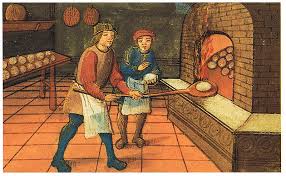
The large number of pilgrims flooding the Holy City produced a plethora of cheap inns and hostels, places where pilgrims could bed down for the night. However, cheap places to sleep, then as now, did not offer meals, and so pilgrims had to eat elsewhere. A general shortage of firewood meant that not only was bread baked centrally at large ovens (usually co-located with flour mills), but also that “cook shops” producing large quantities of food over a single oven was more practical than everyone cooking for themselves.  The result was the medieval equivalent of modern “food courts” ― streets or markets on which a variety of shops offered pre-prepared food. The results were probably not all that different from today; the area in Jerusalem on which these cook-shops concentrated was known as the market of Bad Cooking ― the Malquisinat.


And now to the ingredients:


The staple of the medieval diet was bread derived from grain, and this was true in the Holy Land as well as in the West. Milling was a prerogative of the feudal elite, and bakeries were generally co-located with mills. In rural areas this was usually near the manor, and in urban areas the bakeries were well distributed around the city for convenience, something well recorded archeologically. The primary grains popular in the Holy Land in the crusader period were wheat and barley, but millet and rice is also recorded, whereby rice was not converted into bread instead eaten by the native population that retained Arab/Turkish eating habits that included the consumption of rice.


Animal products were the second pillar of the medieval diet, highly valued, and correspondingly exploited fully from the meat to innards. Of the large domesticated animals, sheep and goats were the most common type of livestock in the region, and the Hospitallers recommended lamb and kid for patients in their hospitals. Jerusalem, however, also had a cattle market and a pig market. The latter is particularly noteworthy given the fact that both Jews and Muslims view pigs as unclean. However, a large (Orthodox) Christian population continued to live in the Holy Land throughout the Muslim occupation of Jerusalem, so pigs would have been bred and did not need to be imported. There is also evidence of camels in the crusader states, and camel meat is considered a delicacy in much of the Middle East. However, it is questionable that the Franks adopted the habit of eating camel meat. The camels of Outremer were more probably used as beasts of burden not as food.

Of the smaller animals, poultry and fish, certainly belonged to the crusader diet, the latter being particularly important as meat was prohibited on “fasting days” such as throughout Advent, Lent and on Fridays. In the second century of the crusader states, the population of Outremer was clustered along the coastline, and fish from the Mediterranean would have been plentiful and fresh. This would have represented a great enrichment of crusade cuisine unknown in most of continental Europe, where it was impossible (using medieval means of preservation) to get fish from the catch to the table in a form resembling “fresh.” The Mediterranean yields some of the most delicious fish, including squid and octopus.

Game is the one form of animal, however, that does not appear to have played an important role in the crusader diet. This was probably because population density did not allow for large tracts of fertile land in which game could thrive. Hares are the only exception that I have found (admittedly without in-depth scientific research) and some form of deer (on Cyprus).

Animal products such as eggs, milk, butter, yogurt, and cheese were, on the other, consumed in the Holy Land in the crusader period, the latter being more important than the former. While milk and butter is hard to preserve fresh, cheese is a product with a comparatively long shelf-life. Furthermore, cheese can be produced from cattle, sheep, goat and camel milk. A comparatively wide variety of cheese would, therefore, most probably have been available. Yogurt, being a product used heavily in the Middle Eastern diet, would likewise probably have been known to crusaders, though probably less readily embraced.


Vegetable varieties in contrast would have seemed limited by modern standards. Legumes were the primary vegetables of the Middle Ages, and in the crusader states the most important vegetables were beans including broad beans, various lentils, cabbage, onions, peas and chickpeas. However, fresh cucumbers and melons were both native to the Levant and formed part of the crusader diet.


Fruits were also a key component of crusader cuisine, and here again the residents of Outremer had ready access to fruits, such as oranges and lemons, that were considered outrageous luxuries in the West, yet grew in abundance in the Levant. Along with typical and familiar fruits from the West such as apples, pears, plums and cherries, Outremer cultivated orchards of pomegranates (particularly around Ibelin and Jaffa). Figs, dates, carobs and bananas were also native to the region and continued in cultivation during the crusader period. But arguably most important of all were grapes, which ― of course ― were eaten fresh and dried (raisins and currants) and pressed/fermented as wine.


Other important trees that yielded important dietary supplements were almonds, pistachios and, most important of all, olives. Olive oil was and is fundamental to Middle Eastern cuisine. It is the primary source of cooking oil, used both as a means of cooking and a supplement for consistency and taste.

The most famous olive trees in the Holy Land: the Mount of Olives outside of Jerusalem
And then there are the “additives” that make such a difference to the taste of food: honey, sugar, herbs and spices ― all ingredients found readily in the crusader states. Indeed, refined sugar was one of the main exports of the crusader states, which had many sugar cane plantations in the Jordan Valley, along the coast and later on Cyprus. Honey is also listed as one of the major products of Cyprus during the crusader period. A variety of herbs such as rosemary, thyme, and oregano grow in abundance, but more significant is that many of the spices coveted by the West and only available at very high prices in Europe passed through the ports of Outremer. The coastal cities and Jerusalem had spice markets in which these exotic, high-value products were available in quantities and at prices unimaginable in the West. Thus crusader cuisine would have been enriched by the use of cinnamon, cumin, nutmeg, cloves, saffron, and black pepper among others.


Given the materials the cooks of Outremer had to work with and the inspiration they could draw from their Greek, Arab and Turkish neighbors, I think we can assume that ― despite the presence of some mediocre fast-food joints in the Market of Bad Cooking ― the chefs and housewives throughout the crusader states could produce some truly wonderful cuisine.


Daily life, including cooking and food, is depicted as accurately as possible in my novels set in Outremer:


       Buy Now!                                         Buy Now!                                      Buy Now!


Friday, July 29, 2016

Battle of Jaffa - Part 1


By July 1192, the crusader forces under Richard I of England and the Duke of Burgundy had established Frankish control of the coastal strip from Tyre to Ascalon, but failed, despite two attempts, to take Jerusalem. While Tyre remained a bastion and Acre was rapidly turning into one, most of the cities along the coast such as Haifa, Caesarea, and Arsur, remained ghost towns, vulnerable to attack, and the countryside in between was empty, ravaged and slowly being reclaimed by the sand dunes.  Yet, Richard had also recaptured and fortified the strategically important cities of Jaffa and Ascalon. Jaffa was important as the port closest to Jerusalem, and so inevitably the base for any future attempt to recapture Jerusalem.  Ascalon was critical because it was located on the caravan routes between Egypt and Syria and therefore posed a threat to Saladin’s lines of communication. What the Franks now needed, was to re-establish control of the coastal strip northwards from Tyre to re-establish contact with the County of Tripoli and beyond Tripoli, the Principality of Antioch.  In consequence, Richard I started gathering his forces at Acre for a campaign up the coast of the Levant to retake Sidon and Beirut.


His plans were shattered when on July 29, the Sultan Salah ad-Din (Saladin) launched a surprise attack in the Frankish rear — at Jaffa. It was a brilliant strategic move. If Saladin could take Jaffa, he would cut Ascalon off from the rest of the Frankish-held territory, ensuring his ability to re-establish Saracen rule there as well.  The capture of Jaffa would in addition make future attempts on Jerusalem more difficult and so more unlikely. To achieve these critical objectives (and incidentally refurbish his own tarnished image), Saladin brought to bear a force which the Itinerarium Peregrinorum et Gesta Regis Ricardi[1] describes as 20,000 Saracen horsemen and “countless” infantry.


Although the garrison resisted courageously, Saladin brought up siege engines and sappers, and on July 31 a massive breach in the walls opened up. The garrison sued for terms, including the right to withdraw with their lives, arms, and chattels, but the Sultan’s army had been in the field for over a year without any opportunity for plunder. The Kurds, Turks, Syrians and Egyptians fighting under Saladin were not a cohesive and disciplined force, but a coalition of units more loyal to their own leaders. The orders not to plunder were not popular, and the Sultan soon lost control of his troops. They ran riot in the town. The garrison fled to the citadel, but those who could not make it in time, notably the sick and wounded in the Hospital of St. John along with their care-takers, were killed. Saladin’s troops then engaged in an orgy of pillage that included smashing the wine-casks to pour the forbidden substance in the gutters and slaughtering the entire pig population—another food forbidden by Islam.   

Salah ad-Din, angered that his troops had disobeyed the terms of the surrender, ordered his Mamlukes to stand at the gates of the city and confiscate the plunder from his men as they staggered out of the city laden with loot. While the gesture demonstrates Saladin’s sincerity in treating with the garrison, it was bitterly resented by his own troops, and would have consequences later. Meanwhile, however, the seizure of Jaffa in just three days demonstrated how vulnerable the precarious new conquests of the Third Crusade really were.


The word that Jaffa was under siege reached Richard I in Acre on or about July 29 or 30. He immediately abandoned his plans to recapture Sidon and Beirut and took ship for Jaffa. He took with him only his immediate household, some fifty-five knights, and some two thousand Italian crossbowmen in a half-dozen ships. This was never intended to be anything more than an advance guard that would stiffen the morale of the garrison. The main relief force was the army of Jerusalem made up of the barons of the Kingdom (Ibelin, Sidon, Tiberius etc.) under their new king Henri de Champagne and the Templars and Hospitallers. This army of heavy horse, Turcopoles and infantry set out from Acre heading south on the coastal road to Jaffa. 


Meanwhile, Richard’s squadron of ships was delayed by light wind and arrived off Jaffa after the city had already fallen to Saladin. From off-shore, the relieving force could see both the Saracen camp around the base of the city and the Saracen banners floating over the city walls. It appeared their help had come too late—until a man jumped from the wall of the citadel and started swimming toward the Frankish ships. (Both the Arab chronicler Baha al-Din and the Itinerarium mention this heroic dive from the citadel walls.) One of Richard’s galleys risked going closer to shore to pick up the swimmer, while the Saracen troops from the camp outside the city swarmed the beaches shouting challenges and insults at the little squadron of ships.


The swimmer was able to report that the citadel still held out, and the King of England immediately gave the order to beach the galleys. With the crossbowmen providing covering fire, Richard led the assault, leaping over the side of his galley into hip-deep water, a crossbow in one hand and a Danish battle axe in the other. He fought his way ashore, followed by his companions. That they were not all slaughtered is probably a function of the fact that by this time Saladin’s army was no longer a disciplined force. The bulk of the cavalry had already been redeployed to block the road from Acre and harass the army of Jerusalem coming to relieve Jaffa. Of the troops left behind, an estimated three thousand were still inside the city plundering. Those that rushed to the shore to defend it were apparently leaderless. Furthermore, the distance between the shore and the city walls was maybe no more than 100 to 200 yards. Richard led his landing force to the base of the walls and then inside a postern in the tower of the Templar commandery that the Saracens had incomprehensibly left unlocked — further evidence of a singular lack of discipline, command and control.


According to the Itinerarium, Richard himself was the first man to enter the city, climbing up a spiral staircase of the Templar tower. He then ordered his banner raised on the rooftop, signaling to the garrison that he was inside the city.  The garrison at once sortied out to join forces with him and his landing force. Together, the garrison and Richard’s men cleared the city of (evidently surprised!) Saracens, while Salah ad-Din withdrew with his entire baggage train. 


Salah ad-Din had taken Jaffa in just three days, but it took Richard the Lionheart only that many hours to regain it. His situation, however, remained precarious. The breach in the wall was not repaired, the streets full of corpses, the stores plundered, and Salah ad-Din’s cavalry was still intact and only hours away.


The second stage of the Battle of Jaffa is the subject of next week’s entry. 

The Battle of Jaffa is an important episode in “Envoy of Jerusalem,” which has just been released. Buy now in paperback or kindle!


[1] The Itinerarium is a contemporary chronicle of the Third Crusade, much of it based on eyewitness sources, but heavily biased in favor of King Richard I of England.